





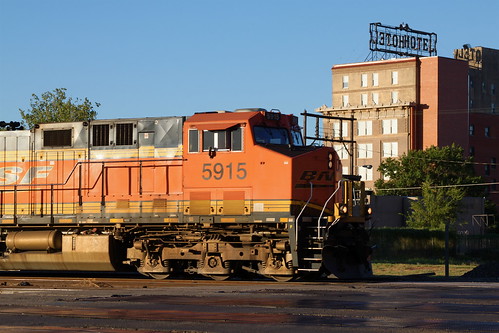
Did you know Wichita Falls, Texas, inspired the 1940 movie ”Boom Town” starring Clark Gable and Spencer Tracy? In fact, the city’s rich history is so colorful it could rival the antics of any frontier town from a famous Hollywood movie. Flashback to the late 1800s and the plot of land just shy of the 100th meridian was home to nothing more than washed-out shanties and dusty farmland. That is until the railroad began laying tracks and everything changed.
Today, Wichita Falls is a thriving market center with a population of more than 100,000. On top of that, the vibrant city is located just miles from Sheppard Air Force Base, which boasts the largest U.S. Air Force technical training wing as well as the multinational Euro-NATO Joint Jet Pilot Training Program (ENJJPT). So how did Wichita Falls go from a two-bit town to the bustling business hub and military center it is today? Take a journey back in time to learn more about the colorful history of Wichita Falls.
Native Americans Settle the Area
In the mid-1700s, Caddoan Native Americans migrated to the land now known as Wichita County from present-day Kansas and Nebraska. They began to establish communities in the area and farm the land. However, the Caddoans often found themselves in heated conflicts with Apache and Comanche tribes who had previously claimed the land as their own. Settlers typically avoided the area as a result. After federal troops forced Native Americans onto reserve lands north of the Red River around the mid-1800s, others began to explore the area.
Early Pioneers Arrive
Between the late 1700s and mid-1800s, European explorers visited the area that now makes up Wichita County. Athanase de Mézières, Pedro Vial, and José Mares were some of the first people to leave their mark on the land. By the 1830s, soldiers who fought in the Texas Revolution began receiving land grants to permanently settle in the area. However, it wasn’t until 1855 that someone actually did.
Mabel Gilbert built a house on a bluff above the Red River just 10 miles north of present-day Wichita Falls. Three years later, the Texas government created Wichita County, but it wasn’t until the 1870s that most pioneers began to arrive.
A Legend Begins
According to legend, John A. Scott won the deed to the plot of land where Wichita Falls now sits during a poker game in 1837. The truth is that he purchased the land and promptly forgot about it. It wasn’t until after he died that his heirs discovered the deed and decided to dig a bit deeper. They hired M. W. Seeley to come up with a plan for developing a city in the area. The year was 1876, and a small community had already started to form.
Finally, in September 1882, Wichita Falls was officially founded with the arrival of the first Fort Worth and Denver City Railway train. At the time, it was nothing more than a shantytown. Once the railroad extended its lines into the area, it became easier for cattle ranchers and corn farmers to get their goods to market. People soon flocked to the area, and the city began growing over the next several decades.
You’ll find well-preserved reminders of the past all over Wichita Falls. The Hamilton Building and La Salle Crossing Apartments are just a few of the historic buildings that remain from this time.
Kemp and Kell Take Charge
Joseph A. Kemp and his brother-in-law, Frank Kell, were largely responsible for putting Wichita Falls on the map. Kemp arrived in 1883 and opened a general store. Kell moved to the area about 13 years later after purchasing the Wichita Valley Mills Company, which is now known as Attebury Grain. Between 1884 and 1911, they worked tirelessly to promote the growth of their city. Most notably, they brought three more rail lines into the fold. Now, ranchers could ship their goods to Fort Worth and other outlets across the nation. It wasn’t long before the city began to grow.
Thanks to the efforts of Kemp and Kell, Wichita Falls quickly became a major transportation and distribution center for the entire region. The Route Building at 503 Eighth Street stands today as a reminder of the railroad’s influence on the early beginnings of Wichita Falls. Originally constructed in 1909 by Kemp and Kell to house their offices, the building also served as a rail depot.
Kemp and Kell had their hands in all kinds of businesses, from food processing to retail and banking to oil. Undoubtedly, Wichita Falls wouldn’t be the flourishing center it is today without their contributions. Other reminders of Kemp and Kell’s legacy include the Kell House Museum, the Kemp Center for the Arts, which was originally a public library Kemp bought for his wife as a Christmas gift, and the Kemp-Kell Building, which is now known as the Holt Hotel.
Texas Tea Leads to a Boom
After the discovery of oil in nearby Burkburnett, Texas, in 1918, Wichita Falls exploded with activity. People hungry to get rich off Texas tea quickly made their way to Wichita Falls. Businesses popped up overnight as a way to support the fast-growing population. For years to come, oil played a major role in the city’s success. Key oil producers included the companies now known as Texaco, Gulf, and Mobile Oil.
Today, you can learn more about the rich history of Wichita Falls with a visit to one of the many historic museums, neighborhoods, and sites found all over the city. One of the most popular sites includes the former City National Bank where a bank robbery once took place. Another is the farmers market. It serves as a modern adaptation of the Union Station building that once stood in the same spot.
At Herb Easley Chevrolet, we love learning about the vibrant past of Wichita Falls and wanted to share some of our knowledge with you. Did you find our profile on this historic city interesting? Did we miss any details — a legendary tale locals love to tell about a colorful character or a favorite building? If we did, let us know! Drop us a line, and we’ll be sure to add it to our list.
Connect with us


Recent Blog Entries
- Comparing Chevrolet SUVs: Trax vs. Trailblazer vs. Equinox. Which Is Right for You?
- 2025 Chevrolet Silverado 1500 Review: What Makes It a Top Choice for Wichita Falls Drivers
- Why Regular Dealership Maintenance Helps Your Chevrolet Last
- When Should I Change My Tires?
- Best Chinese Restaurants in Wichita Falls, TX